
On our Facebook page we have been profiling Cecil County patriots. For the most part, colonial Cecil Countians were in support of the Patriot cause. There were, however, a few exceptions. Here are some Cecil County residents who were not in favor of the Patriot Cause.
Robert Alexander – Probably the best known loyalist, Alexander belonged to an aristocratic family that owned a large tract of land in Head of Elk (Elkton). This inherited land stretched from Farr Creek to the “hollow”, at what is now the intersection of Main Street and Bow Street. Alexander served in the Provincial Convention in 1774 and was chosen to serve in the Continental Congress in 1776. He resigned when Congress declared for independence. In August of 1776, Alexander refused to sign the Oath of Allegiance to the Colonies. After a year at his home in Elkton, he hosted General Washington at his home on August 25, 1777. Three days later, he invited the invading British General Howe into his home. He then left his wife and six children and joined the British while they were docked in the Chesapeake Bay. He never returned to his family or land. His more than 2,000 acre estate was confiscated from him in 1782. His wife was permitted to keep the Elkton house, known today as the Hermitage, some slaves, and 30 acres of land. This land was sold and became a large portion of the town of Elkton. Alexander died November 20, 1805 in London, alone.
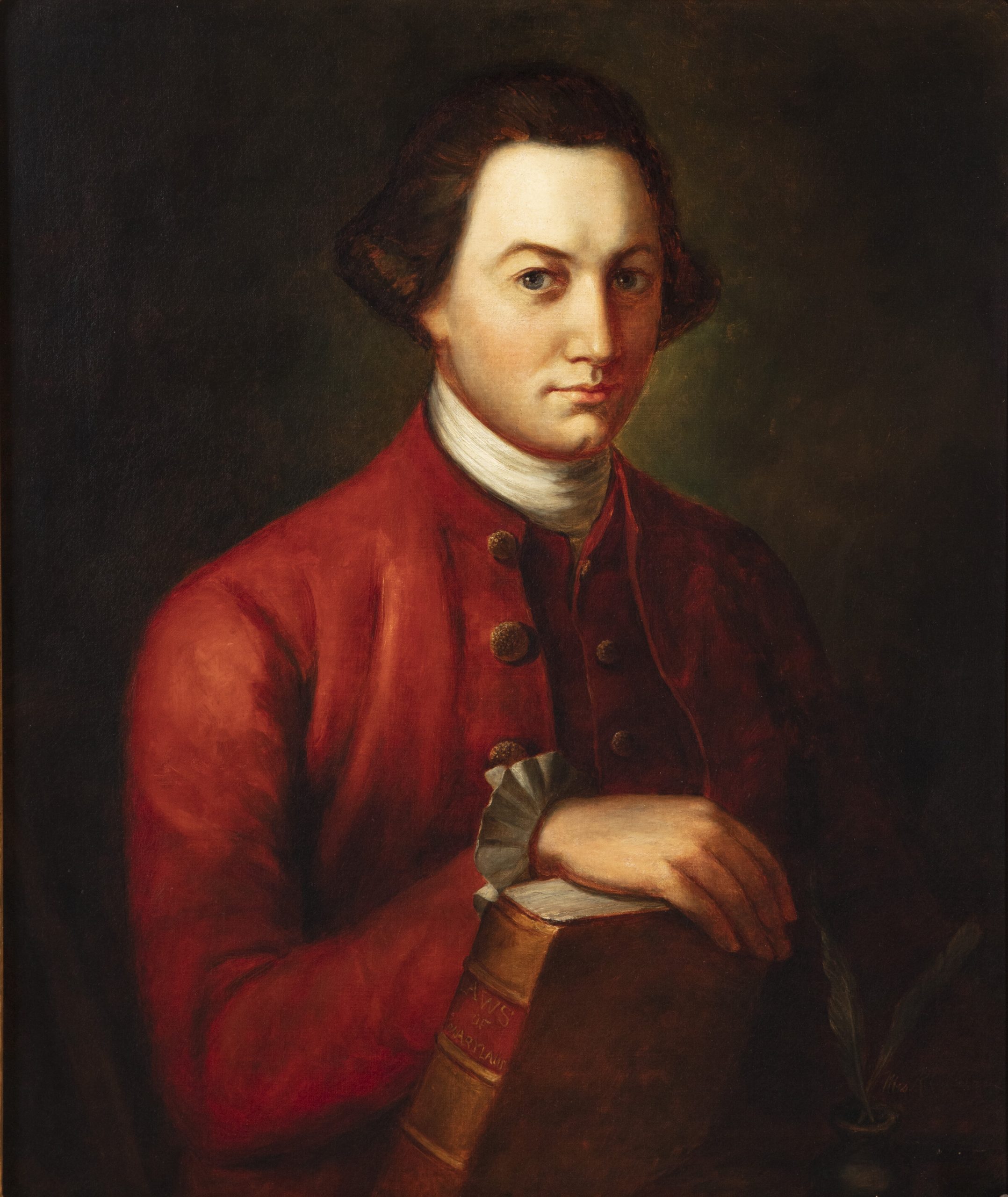
Philip Barton Key – Key was born near Charlestown, Maryland. Key served as a captain in the United Corps of Maryland and Pennsylvania Loyalists during the Revolutionary War, 1778-1783. He fought for the British until he was captured by the Spanish in Florida. He was kept prisoner for a month in Havana, Cuba before being paroled and to New York City until the end of the war. As a result, his property was confiscated. After the war, Key was the only former British American Loyalist to regain prominence in United States politics. (MSA SC 3520-2060)
John Stump – Stump was an assistant to Colonel Henry Hollingsworth in obtaining flour for the Maryland troops. He pretended to be captured with his cargo of flour while en route to Boston. Stump appeared before the Admiralty Court in New York where he produced a pass that permitted him to import the flour to New York. The court returned his ship and cargo. Stump then sold his cargo to the British Army.
John Roberts – John Roberts was actually a subject of Pennsylvania with property in Maryland. When the British occupied Philadelphia, Roberts provided them with supplies and was accused of helping them locate forage. He was convicted of treason against the Pennsylvania government. Despite pleas for mercy from, according to some accounts, signers of the Declaration of Independence, he was executed on November 4, 1778. He owned property in Cecil County amounting to 1364 acres and included sixteen slaves. His property was confiscated. The property was left in the care of Thomas May who agreed to maintain the condition of the property for the Commissioners until a later date.