After Cecil County’s county seat had been at Jamestown on the Sassafras River and at Courthouse Point on the Elk River, the citizens decided it was time to move the seat of justice. At the November 1781 session of the court, it was decided to hold an election to choose the new county seat.
At the election held at the courthouse, there were 43 votes for Charlestown, 1 vote for Head of Elk, and 2 votes for no move. At Head of Elk there were 34 votes for Charlestown, 2 votes for Head of Elk, and no votes for Courthouse Point. At the election in Charlestown, 450 votes were cast for Charlestown, and they were all for Charlestown.
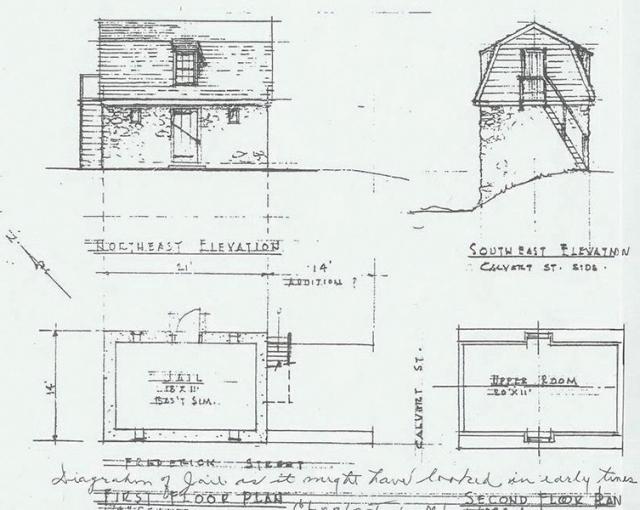
In March of 1782, court appointed justices Jeremiah Baker and Nathan Norton were tasked with finding a “house to hold courts in for the future, and to get workmen to do what repairs they thought necessary and contract for the same” in Charlestown. In May, according to Johnston’s History of Cecil County, the justices leased 2 rooms from Alexander Hasson on the second floor of his home for three years at an annual rent of 20 pounds. These rooms were in a brick building on Market Street. At the same session of court, Patrick Hamilton was authorized to build a small stone jail for the use of the county.
Charlestown served as the county seat for 5 years. During that time, the needs of the citizens changed slightly. Most people had settled near navigable water, but the county now had started moving away from the water. The county was filling up, and the public demanded a more central location for the “seat of justice”. The public wanted to be able to reach the courthouse without ferries.
During the time that Charlestown was the county seat, the town tried to improve itself. The town wanted to become prosperous and to become a city of importance and this did not happen. Possibly because of this failure, no public buildings, except for the jail, had been built in Charlestown. Many people were in favor of moving the court to Head of Elk. Head of Elk had become important because of the flour trade. The Hollingsworth family of that town had been engaged in the flour trade and were influential in the county’s affairs.
The change in the location of the county seat was very much opposed by the citizens of Charlestown. Their efforts to stop this from happening were unsuccessful and in November of 1786, the Maryland legislature passed an act authorizing and appointing Joseph Gilpin, Tobias Rudulph, Sr., Zebulon Hollingsworth, Joseph Baxter, and Edward Oldham to act as commissioners to erect a courthouse and jail at Head of Elk. This act also required them to levy a tax not exceeding 1,200 pounds for this construction. Charlestown, as the seat of justice for Cecil County, was no more.